 English
 Kinyarwanda










FCC Coalition Criticizes President Félix Tshisekedi’s Leadership: An In-Depth Analysis
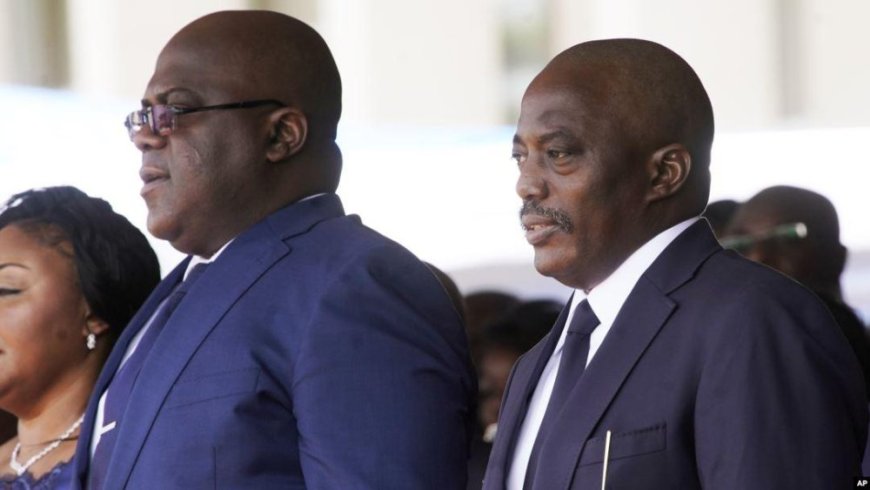
The Front Commun pour le Congo (FCC), a political coalition supporting Joseph Kabila, the former President of the Democratic Republic of Congo (DRC), has recently launched a scathing critique of the current administration led by President Félix Tshisekedi. The FCC’s statement highlights their concerns about Tshisekedi’s perceived lack of vision and competency in leading the country.
Background and Context
Joseph Kabila, who served as President of the DRC from 2001 to 2019, has been a significant figure in Congolese politics. His presidency saw numerous challenges, including political instability, economic struggles, and ongoing conflict in various regions. In December 2018, Félix Tshisekedi won the presidential election, marking a notable transition of power in the DRC’s political landscape. Tshisekedi's victory was viewed by many as a potential turning point for the country, offering a fresh start and the possibility of political and economic reform.
However, as Tshisekedi’s administration has progressed, criticisms have emerged regarding his leadership style and governance. The FCC, which remains a powerful political force in the DRC, has been vocal about these concerns, suggesting that Tshisekedi’s presidency is characterized by ineffective leadership and a failure to address key issues facing the nation.
FCC’s Criticisms of Tshisekedi’s Leadership
In a recent statement, the FCC accused President Tshisekedi of perpetuating a climate of political persecution against his opponents. This accusation extends to members of the FCC coalition, who have claimed that the current administration has engaged in a systematic campaign to suppress dissent and stifle political opposition. The FCC argues that these actions represent a significant regression from the democratic principles that were hoped to be advanced under Tshisekedi’s leadership.
The statement from the FCC asserts that the persecution of opposition figures is not only a violation of democratic norms but also a detrimental step backward in the pursuit of the rule of law. According to the FCC, such actions indicate a government that is not only resistant to differing viewpoints but is also marred by corruption and mismanagement. This, they argue, undermines the very foundations of democracy and good governance that were expected to flourish under the new administration.
Furthermore, the FCC’s statement highlights what it perceives as a lack of clear direction and strategic vision within Tshisekedi’s government. The coalition argues that Tshisekedi’s administration has been unable to effectively address the country’s legal and administrative challenges, leading to a situation where the government attempts to cover up its shortcomings by silencing its critics rather than addressing the underlying issues.
Political Repression and Human Rights Concerns
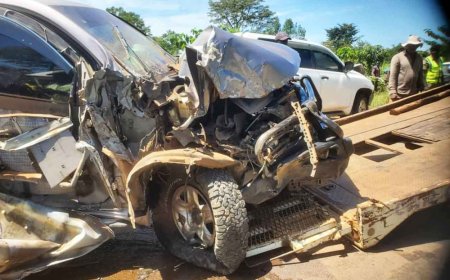
The FCC’s criticism is not merely political rhetoric; it is rooted in serious allegations of political repression and human rights abuses. One of the most notable incidents cited by the FCC is the case of Chérubin Okende, a former Minister of Transport and Communications. Okende’s death, which was reported in July 2023, has sparked outrage and calls for justice. His body was discovered in a vehicle in Kinshasa, with evidence suggesting that he had been shot. The circumstances surrounding his death have raised suspicions about the possible involvement of state actors or supporters of the current administration.
The alleged persecution of political opponents is seen as part of a broader pattern of behavior by the Tshisekedi administration. Critics argue that the government has used its power to target individuals who oppose its policies or who are seen as threats to its authority. This has led to a climate of fear and repression, where dissenting voices are increasingly silenced through various means, including imprisonment, harassment, and even violence.
Joseph Kabila remains a significant figure in Congolese politics, and his role continues to be a point of contention between his supporters and the current administration. The FCC, as a coalition of parties aligned with Kabila, has been active in challenging Tshisekedi’s government and highlighting what it sees as failures and abuses.
The FCC’s statement also touched on the political maneuverings involving Kabila’s legacy and the ongoing struggle between his supporters and the current ruling party. President Tshisekedi has accused Kabila of founding the AFC coalition, which comprises military and political groups that oppose the DRC’s government in North Kivu province. This accusation reflects the deep-seated political rivalry and ongoing conflict within the country.
Allegations of Kabila’s Flight and Current Status
Recent reports have suggested that Joseph Kabila may have fled to South Africa due to fears of arrest or persecution. However, the FCC and Kabila’s own party, the Parti du Peuple pour la Reconstruction et la Démocratie (PPRD), have countered these reports by stating that Kabila has not fled but is instead engaged in a period of reflection and analysis. This discrepancy in reports highlights the ongoing uncertainty and speculation surrounding Kabila’s current status and his future role in Congolese politics.
The ongoing conflict between the FCC and Tshisekedi’s administration has significant implications for the future of the DRC. The political tension and accusations of human rights abuses contribute to an already volatile environment, where the rule of law and democratic principles are at stake. The international community and Congolese citizens are closely watching the developments, as they could impact the country’s stability and prospects for genuine democratic progress.
As the FCC continues to challenge Tshisekedi’s government and expose what it sees as failures and injustices, the situation in the DRC remains fluid and uncertain. The need for effective governance, respect for human rights, and a commitment to democratic principles will be crucial in shaping the country’s future and ensuring that it can overcome its longstanding challenges.