 English
 Kinyarwanda










Lawmakers in Turkey Engage in Violent Clash During Debate on Jailed Colleague
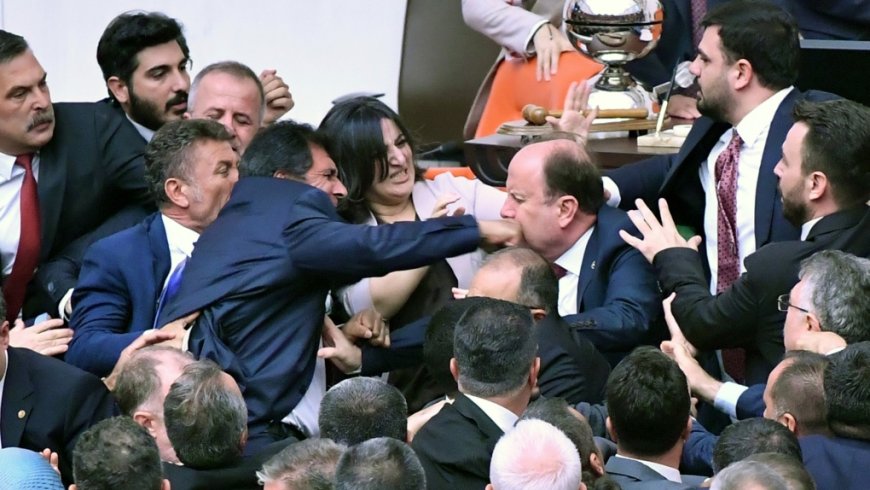
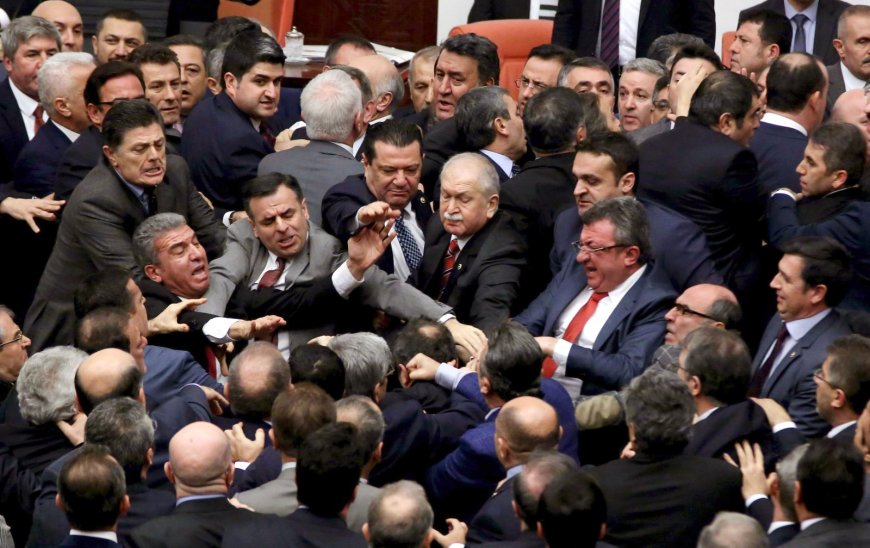
On Friday, an extraordinary scene unfolded in Turkey’s Grand National Assembly as a violent brawl broke out among lawmakers during a debate on the imprisonment of an opposition deputy. The incident, which saw multiple injuries and chaos in the chamber, highlights the intense political polarization and escalating tensions within Turkey’s political landscape. This altercation not only disrupted parliamentary proceedings but also underscored the broader issues surrounding political freedoms and justice in Turkey.
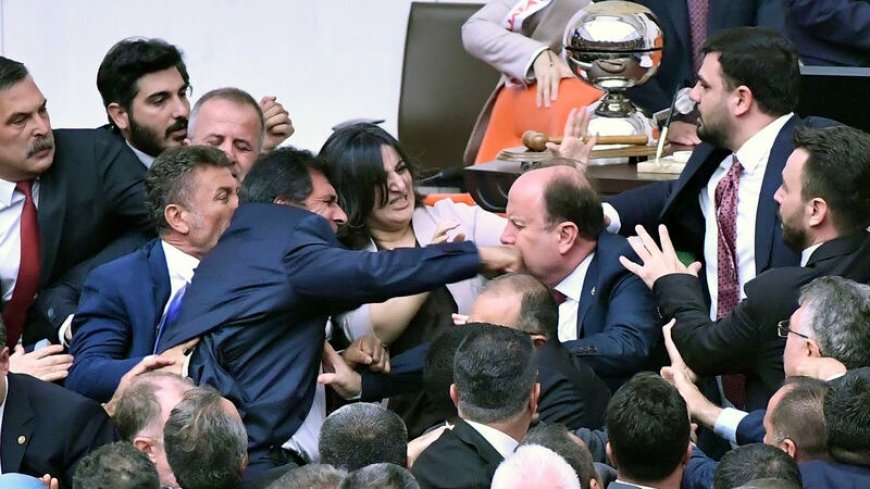
The tumultuous clash began as Ahmet Sik, a representative from the Workers’ Party of Turkey (TIP), took the floor to speak on behalf of his imprisoned colleague, Can Atalay. Sik’s remarks were highly provocative, as he denounced members of President Recep Tayyip Erdogan’s ruling party, the Justice and Development Party (AKP), referring to them as a "terrorist organization." Sik’s comments were made from the parliamentary podium, a location symbolically representing the high stakes of the debate and the gravity of the issues at hand.
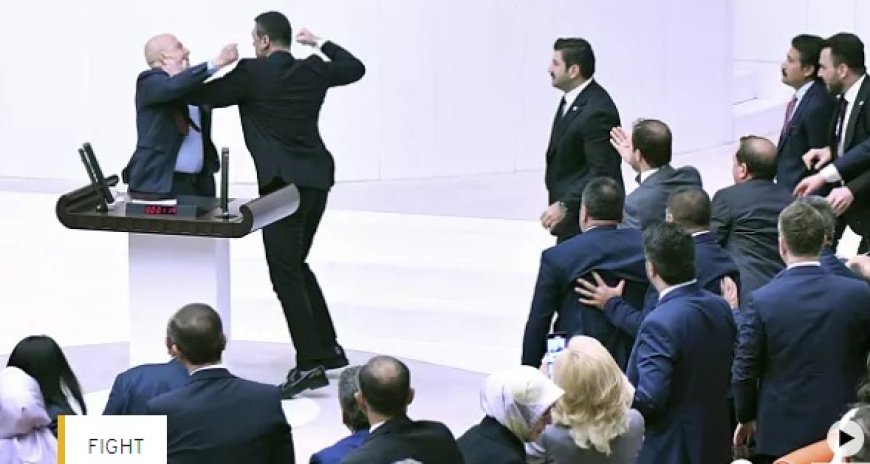
The reaction from the ruling party was swift and violent. A member of the AKP, infuriated by Sik’s accusations, launched a physical attack on the opposition lawmaker. This confrontation quickly escalated into a larger melee involving numerous deputies from both sides of the aisle. The melee spread through the chamber, disrupting the debate and resulting in a chaotic scene of shoving, hitting, and shouting.
The violence resulted in serious consequences. A female lawmaker from the opposition was struck during the altercation, with blood staining the steps leading up to the speaker’s lectern. Another opposition member sustained injuries, although details regarding their condition were not immediately disclosed. The brawl highlighted the deep-seated animosity and animus between the two sides, reflecting the polarized and contentious nature of Turkish politics.
Background on the Debate
The parliamentary session was convened to discuss the case of Can Atalay, a prominent opposition figure who was elected to the parliament while serving an 18-year prison sentence. Atalay, a member of the TIP, was imprisoned for his involvement in anti-government protests that occurred in 2013. These protests were a significant challenge to the rule of Erdogan, who was then Turkey’s prime minister.
The charges against Atalay and the length of his sentence have been widely criticized by human rights organizations and international observers, who argue that they are politically motivated. Atalay’s conviction stems from his alleged role in organizing and participating in the Gezi Park protests, a series of demonstrations against government policies that were met with heavy-handed police repression. The protests, which began as a local movement to protect a park in Istanbul, evolved into a broader nationwide outcry against perceived authoritarianism and corruption within Erdogan’s government.
Despite his incarceration, Atalay was elected to parliament in the 2023 elections. His election as a deputy was seen as a symbolic victory for the opposition and a challenge to the ruling party’s dominance. Atalay’s election has been a focal point for debates on political repression and the legitimacy of Turkey’s judicial system. His ability to take his seat in parliament is viewed as crucial for his immunity from prosecution, which would lead to his release from prison. Atalay has vowed to return to incarceration once his parliamentary term concludes, emphasizing his commitment to his cause and the principles he advocates.
Political and Social Implications
The brawl in the Grand National Assembly is emblematic of the broader political crisis facing Turkey. The country has been grappling with increased political repression, curtailed freedoms, and a deeply polarized political climate. The AKP government, under Erdogan’s leadership, has faced criticism for its handling of dissent and its approach to opposition figures. The erosion of democratic norms and the suppression of political dissent have been central issues in Turkey’s recent history, with opposition figures and activists frequently facing harassment, imprisonment, and violence.
The physical altercation in parliament reflects the deep-seated divisions and tensions that have characterized Turkish politics in recent years. The clash underscores the extreme polarization that exists between the ruling party and the opposition, with both sides engaging in increasingly aggressive tactics to assert their positions. The violence within the parliamentary chamber is a stark reminder of the deteriorating state of democratic institutions in Turkey, where political disputes are often resolved through confrontation rather than dialogue.
The incident also highlights the personal risks faced by lawmakers in Turkey’s fraught political environment. The physical and psychological toll on those involved in the brawl, as well as on their families, is significant. For opposition members like Ahmet Sik and Can Atalay, the violence serves as a harsh reminder of the personal sacrifices and dangers associated with their political activism. The attack on Sik and the injuries sustained by other lawmakers further illustrate the high stakes of political engagement in Turkey and the lengths to which various factions are willing to go to advance their agendas.
International Response
The violent altercation in Turkey’s parliament has drawn international attention, with various human rights organizations, foreign governments, and diplomatic entities expressing concern over the escalating violence and political repression in the country. Observers have criticized the incident as indicative of a broader crisis in Turkey’s democratic processes and governance.
International responses have called for a thorough investigation into the violence and accountability for those responsible. Human rights advocates and international bodies have emphasized the need for Turkey to uphold democratic norms and ensure that political disagreements are resolved through peaceful and lawful means. The incident has also sparked renewed discussions on the state of political freedoms and human rights in Turkey, with calls for greater scrutiny and intervention from the international community.
The Path Forward
In the wake of the parliamentary brawl, it is imperative for Turkey to address the underlying issues contributing to political violence and instability. Rebuilding trust and fostering constructive dialogue between opposing political factions is essential for restoring order and promoting democratic governance. Efforts to address political repression, enhance transparency, and ensure the protection of human rights are crucial for improving the overall political climate in Turkey.
The incident underscores the need for reforms within Turkey’s political and judicial systems to prevent future outbreaks of violence and to ensure that political conflicts are resolved through democratic processes rather than physical confrontations. The international community’s role in supporting these reforms and advocating for human rights will be critical in shaping the future trajectory of Turkish politics.
As the Grand National Assembly prepares to resume its session, the focus will likely remain on the ongoing debates surrounding Can Atalay’s imprisonment and the broader implications for Turkish democracy. The resolution of these issues will be closely watched by both domestic and international observers, who are keenly interested in the future direction of Turkey’s political landscape.
In conclusion, the violent clash in Turkey’s parliament is a stark reminder of the intense political strife and challenges facing the country. It highlights the urgent need for dialogue, reform, and respect for democratic principles to address the deep-rooted issues that have led to such confrontations. The path forward will require concerted efforts from all political actors and the international community to restore stability and uphold the values of democracy and human rights in Turkey.