 English
 Kinyarwanda









South Korean President Yoon Suk Yeol Faces Impeachment: A Legal Battle for His Presidency
The President of South Korea, Yoon Suk Yeol, who was recently suspended after being impeached by the National Assembly, has expressed his determination to defend himself in court.
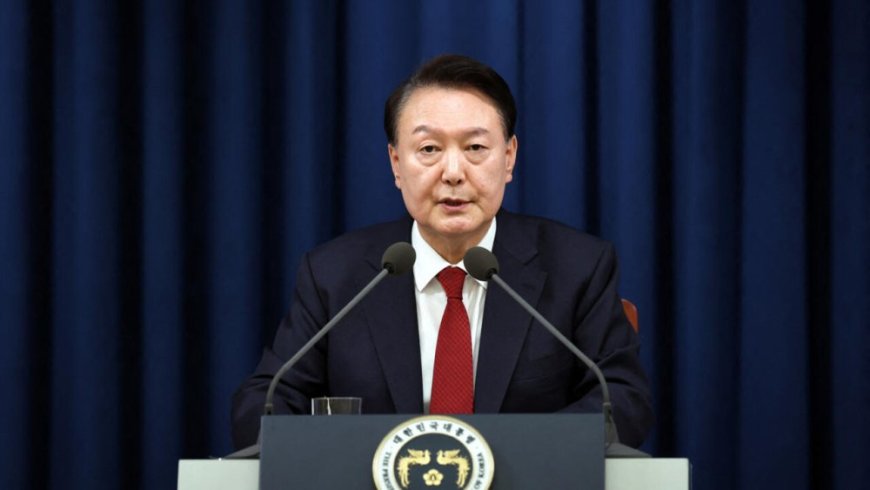
Rather than relying on written statements or delegating his defense to his legal team, Yoon has made it clear that he is prepared to handle this challenge personally. His decision to go to court stems from his belief that he has been wrongly accused and that he must face the legal system directly to prove his innocence.
Yoon’s situation has become dire following an unexpected and unprecedented announcement made on the night of December 3. In a surprising move, he appeared on national television to address the public regarding what he termed as extraordinary circumstances. This announcement took many by surprise, and it quickly triggered widespread protests across the nation. In response to the growing unrest, Yoon made an abrupt reversal of the decision he had made just hours earlier, but unfortunately for him.
The South Korean National Assembly immediately voted to impeach Yoon, and within a short period, the resolution passed, leading to his suspension from office. As a result, the duties of the president were handed over to the Prime Minister, Han Duck-soo, who assumed the role of Acting President. Prime Minister Han is now managing the affairs of the nation while awaiting the court’s decision, which will determine whether President Yoon will be forced to resign.
At the same time, various governmental bodies and legal authorities have launched investigations into the actions of President Yoon. These investigations are aimed at determining whether the president’s actions violated any laws or constitutional provisions. The nature of these inquiries is significant, as they could result in further legal repercussions for Yoon depending on the findings of the investigations.
In the midst of this turmoil, President Yoon is staying at his residence, where he is reportedly working on assembling a team of legal experts to assist him with his defense in court. Yoon’s legal strategy is now a central focus, as he seeks to protect his position and reputation. According to Seok Dong-hyeon, a lawyer and close friend of the president, Yoon is not intimidated by the prospect of appearing in court. Seok emphasized that Yoon is fully prepared to defend himself against the charges brought against him, showing no fear of facing legal proceedings.
Yoon, who has a background as a former prosecutor, has apologized for his decision to declare a state of emergency, which he initiated as part of the extraordinary actions he took. According to Seok, Yoon’s decision to take such extreme measures was largely driven by his concern over the actions of opposition lawmakers. These lawmakers, who are from parties that do not align with Yoon’s political ideology, had planned to force the removal of key government officials, including high-ranking members of the presidential administration. Additionally, they sought to block the approval of a national budget, which Yoon believed would have devastating consequences for the country’s economy.
Seok also suggested that the president’s fear of losing control over the legislative process and the government’s financial stability played a significant role in his decision to declare the extraordinary measures. Yoon saw this as a serious threat to the nation’s governance, and in his view, such a situation required immediate and bold action to preserve the integrity of the government and the functioning of the state.
While Yoon has expressed regret over the actions that led to the public outcry and his eventual impeachment, he has also made it clear that he is not backing down. He insists that his actions were taken in the interest of the country’s future, even if they were controversial. He is resolute in his decision to fight the impeachment and to continue in his role as president if the court rules in his favor. Yoon has emphasized that he is prepared to engage in a long and difficult legal battle to defend his actions, which he believes were justified under the circumstances.
This political crisis has sparked significant debate across South Korea, with some supporting Yoon’s stance and others criticizing his handling of the situation. Opponents of the president argue that his actions were undemocratic and that they undermined the rule of law. They contend that the president should have respected the constitutional framework of the country and found a way to address the opposition’s concerns without resorting to such drastic measures.
On the other hand, Yoon’s supporters assert that the president was simply trying to protect the nation’s stability and to prevent political gridlock from undermining essential government functions. They believe that his decision to take bold action was necessary in light of the growing opposition threats and the risk that the country could descend into chaos if the legislative body had successfully pursued its plans to impeach key officials and block the budget.
The political future of Yoon Suk Yeol now hinges on the outcome of the court’s ruling. If the court decides that his actions were within the boundaries of the law and did not constitute a breach of his presidential duties, Yoon may be able to resume his role as president. However, if the court rules against him, he may be forced to step down, marking the end of his presidency.
In conclusion, while President Yoon Suk Yeol is facing a momentous challenge, he remains steadfast in his resolve to defend himself in court. He is determined to prove that his actions were motivated by a genuine desire to protect the country’s future, despite the controversies surrounding his decision. As investigations continue and the court prepares to make its ruling, South Koreans are watching closely to see how this political crisis will unfold and what it will mean for the nation’s leadership moving forward.