 English
 Kinyarwanda



















U.S. Seizes Venezuelan President Nicolas Maduro’s Aircraft Amid Escalating Sanctions
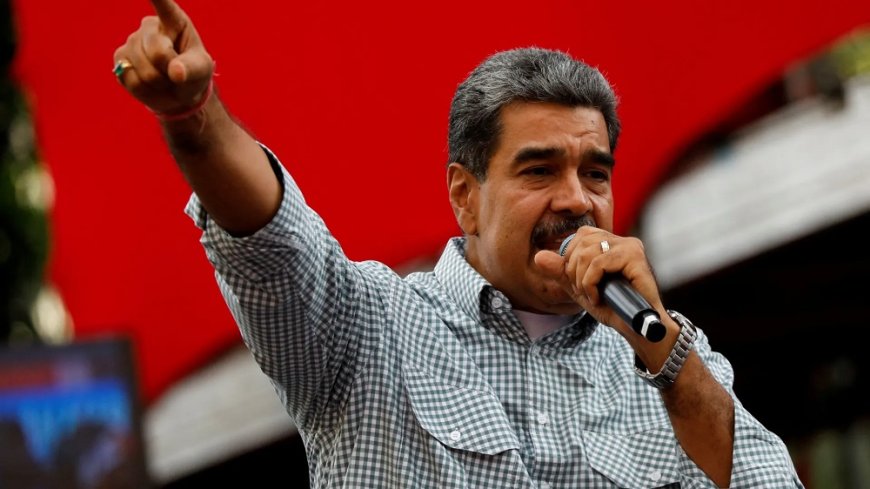
On September 2, 2024, the United States government escalated its pressure on the Venezuelan regime by seizing a private jet used by President Nicolas Maduro. This action is part of a broader strategy to enforce stringent sanctions aimed at isolating and weakening Maduro's administration, which has long been accused of human rights abuses, corruption, and drug trafficking.
The Seizure of the Dassault Falcon 900EX
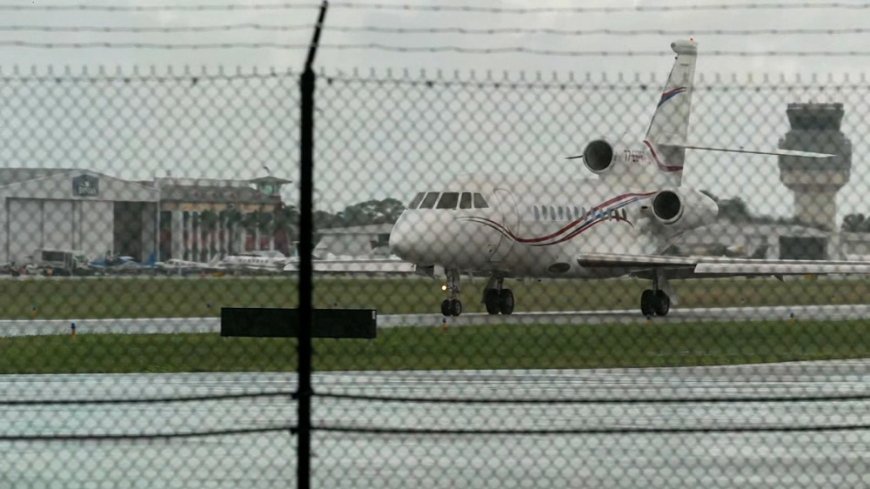
The aircraft in question, a Dassault Falcon 900EX valued at approximately $13 million, was seized while in the Dominican Republic. The U.S. Department of Justice, in a detailed statement, explained that the jet was acquired and utilized by Maduro and his close associates to facilitate international travel, often to countries that have remained sympathetic to his government despite global condemnation.
The seizure of this aircraft is not merely a symbolic act but a significant blow to Maduro's ability to travel and maintain diplomatic relations. The Dassault Falcon 900EX is a long-range business jet known for its luxurious amenities and ability to travel vast distances without refueling. For a leader like Maduro, who has been ostracized by much of the international community, the plane represented a critical tool for maintaining his government's external ties and conducting covert operations.
Background on U.S. Sanctions Against Venezuela
The seizure of Maduro’s aircraft can be traced back to a series of sanctions imposed by the U.S. government in recent years. In August 2019, then-President Donald Trump signed an executive order that intensified economic sanctions against Venezuela. This order specifically targeted President Maduro, his inner circle, and entities associated with his government. The sanctions prohibited U.S. citizens and companies from engaging in business with these individuals and entities, effectively cutting off Venezuela from critical financial resources.
These sanctions were implemented following allegations that President Maduro was involved in narcotics trafficking. The U.S. government accused him of turning Venezuela into a narco-state, using drug money to fund his government and suppress dissent. The allegations included claims that Maduro and his allies were involved in large-scale cocaine trafficking operations that funneled drugs into the United States and Europe.
In response to these accusations, the U.S. Department of Commerce took further steps to restrict the export of goods, services, and technologies to Venezuela, particularly those that could be used by the military or intelligence services. These measures were designed to cripple Venezuela’s capacity to maintain its security apparatus, which has been instrumental in keeping Maduro in power despite widespread domestic and international opposition.
The Role of the Dassault Falcon 900EX
According to the U.S. Department of Justice, the Dassault Falcon 900EX was acquired through a complex web of transactions designed to circumvent U.S. sanctions. The investigation revealed that individuals linked to President Maduro used a company based in the Caribbean to purchase the aircraft from a seller in southern Florida. This purchase was part of a broader strategy to maintain Maduro's mobility and ability to conduct state affairs in the face of increasing isolation.
Once the jet was purchased, it was transferred to Venezuela via the Caribbean, a route likely chosen to avoid detection by U.S. authorities. The Department of Justice noted that the plane made several stops at a Venezuelan military facility, indicating that it was being used for official state purposes. The jet’s frequent use by President Maduro highlights its importance to his administration, particularly as traditional diplomatic channels have become increasingly inaccessible.
The Dassault Falcon 900EX, with its sophisticated technology and range, allowed Maduro to continue traveling internationally, despite the restrictions imposed by U.S. sanctions. For a regime that has been increasingly cut off from the global financial system, the ability to maintain such an asset was crucial. The plane not only facilitated Maduro’s travels but also served as a means of projecting power and legitimacy to his dwindling number of international allies.
Implications of the Seizure
The U.S. government’s decision to seize Maduro’s aircraft sends a clear message: the U.S. is willing to take drastic measures to enforce its sanctions and disrupt the activities of the Venezuelan government. The seizure is part of a broader strategy to tighten the noose around Maduro and his inner circle, making it increasingly difficult for them to operate both domestically and internationally.
Attorney General Merrick B. Garland, in a statement following the seizure, emphasized that the U.S. would continue to pursue those who violate its sanctions.
The seizure also has significant implications for Venezuela’s already strained international relations. As the jet was frequently used for diplomatic missions, its loss will further isolate the Maduro regime. The inability to travel freely and engage with other nations on equal footing will limit Maduro’s ability to garner support or negotiate with other countries. This isolation could accelerate the regime’s decline, as it becomes increasingly difficult to sustain itself without external backing.
The Broader Impact on Venezuela
For the people of Venezuela, the seizure of this aircraft is likely to be seen as yet another sign of the regime's weakening grip on power. Over the past decade, Venezuela has experienced a severe economic collapse, with hyperinflation, widespread poverty, and the mass exodus of millions of citizens. The country’s infrastructure has crumbled, and basic services like healthcare and electricity are in a state of disrepair.
The Maduro regime has managed to hold onto power through a combination of military support, repressive tactics, and control over the country’s dwindling resources. However, the increasing pressure from international sanctions, coupled with internal discontent, has made the future of the regime uncertain.
The U.S. government’s actions, including the seizure of Maduro’s aircraft, are aimed at hastening this process. By cutting off the regime’s access to resources and limiting its ability to operate internationally, the U.S. hopes to force a change in Venezuela’s leadership. Whether this strategy will succeed remains to be seen, but the seizure of the Dassault Falcon 900EX is a clear indication that the U.S. is committed to pursuing it.
The seizure of President Nicolas Maduro’s aircraft by the United States marks a significant escalation in the ongoing conflict between the two nations. It reflects the U.S. government’s determination to enforce its sanctions and isolate the Maduro regime on the global stage. For Venezuela, already beset by economic and political crises, the loss of this aircraft is a symbolic and practical blow to Maduro’s ability to govern and maintain his international alliances.
As the situation continues to evolve, the international community will be watching closely to see how the Maduro regime responds to this latest challenge and whether the pressure from the U.S. and its allies will ultimately lead to a change in Venezuela’s leadership.