 English
 Kinyarwanda














Italy's Foreign Minister Calls for Increased Enrollment of African Students Amid Coalition Dispute
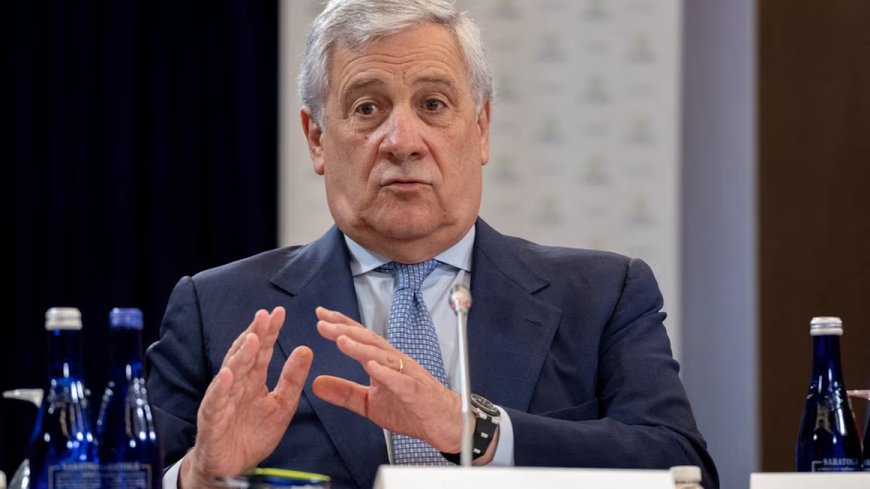
Italian Foreign Minister Antonio Tajani recently made a compelling call for more African students to pursue their education in Italy, a statement that could potentially intensify an ongoing coalition disagreement regarding immigration and citizenship policies. The remarks were made during a Catholic business and politics conference held in Rimini, on the Adriatic coast, where Tajani emphasized the need for Italy to play a more active role in supporting African nations through educational opportunities and development initiatives.
Tajani's Vision for African Students in Italy
Tajani, who is a prominent figure in the center-right Forza Italia party, believes that increasing the number of African students in Italy could serve as a bridge between Europe and Africa, fostering closer ties and mutual understanding. "I think the numbers of African students studying in Italy should be increased," he asserted during his address at the conference. This vision aligns with the broader goals of the Mattei Plan, an Italian development initiative for African countries, which Tajani discussed in his speech.
The Mattei Plan, named after Enrico Mattei, the founder of Italy's state-controlled energy company Eni, is designed to promote economic development in African countries through targeted investments and partnerships. Tajani likened this initiative to a modern-day Marshall Plan, the U.S.-backed program that revitalized European economies in the aftermath of World War II. By focusing on education, Tajani hopes to cultivate a generation of African leaders who are well-versed in Italian culture, language, and values, thereby strengthening Italy’s influence in Africa.
Coalition Tensions Over Immigration and Citizenship
However, Tajani’s proposals come at a politically sensitive time. The Forza Italia party has advocated for reforms that would grant Italian citizenship to foreign minors who have completed most of their education in Italy. This proposal is grounded in the belief that integration through education is key to building a cohesive society. Many in Forza Italia argue that children who have spent the majority of their formative years in Italy, speak the language, and are immersed in the culture should be recognized as citizens.
This stance, however, has met with significant resistance from Italy's two hard-right coalition partners, Prime Minister Giorgia Meloni's Brothers of Italy and Matteo Salvini's League. Both parties have traditionally taken a more restrictive approach to immigration and are wary of any policies that could be perceived as encouraging more immigration or altering the traditional concept of Italian nationality.
Meloni’s Brothers of Italy party, which is rooted in nationalist ideology, has consistently opposed broadening citizenship rights, particularly for children of immigrants. The party’s platform emphasizes the protection of Italian identity and culture, which they argue could be diluted by granting citizenship too readily. Similarly, Salvini’s League has long campaigned on a platform of strict immigration controls, and any move to expand citizenship rights is seen as undermining this stance.
The divergence of views within the coalition has led to tensions, with Forza Italia finding itself at odds with its more right-wing partners. While Tajani's remarks were intended to spark a conversation about the role of education in integration, they also highlight the deep divisions within the ruling coalition on how best to manage immigration and integration in Italy.
The Mattei Plan and Italy's Strategic Interests in Africa
At the heart of Tajani’s proposal lies the Mattei Plan, a strategy that seeks to re-establish Italy as a key player in Africa’s development. Named after Enrico Mattei, who was instrumental in securing Italy’s energy independence in the post-war period, the plan aims to create sustainable economic partnerships between Italy and African nations. The plan’s focus on energy, infrastructure, and education is seen as a way to promote stability and prosperity in Africa, which in turn could help mitigate the root causes of migration.
Tajani's emphasis on education as a cornerstone of the Mattei Plan reflects a broader understanding that economic development alone is not sufficient to foster long-term stability. By investing in the education of African students, Italy hopes to empower the next generation of African leaders with the skills and knowledge necessary to drive their countries forward. This, Tajani argues, would not only benefit Africa but also enhance Italy’s influence on the continent, creating a network of Italian-educated professionals who could serve as informal ambassadors for Italy in their home countries.
Challenges and Opportunities for African Students in Italy
Despite Tajani’s enthusiasm, the reality is that Italy currently lags behind other major European Union countries in attracting foreign students, particularly from Africa. Data from Italy's national statistics institute, Istat, revealed that only about 25,000 study permits were issued in Italy in 2022, a figure that pales in comparison to the nearly 105,000 issued by France and around 70,000 by Germany.
Several factors contribute to Italy’s relatively low numbers of foreign students. One of the most significant is the limited use of Italian as an international language. Unlike English, which is widely spoken and used as a medium of instruction in many countries, Italian is less commonly taught and spoken outside of Italy. This language barrier can be a significant deterrent for prospective students from non-Italian-speaking countries.
Another challenge is the difficulty of finding work in Italy, both during and after studies. The Italian job market, particularly for young people and foreigners, is notoriously difficult to navigate, with high youth unemployment and rigid labor market regulations. Many students are deterred by the prospect of struggling to find employment after graduation, especially if they are not fluent in Italian.
Furthermore, the bureaucratic hurdles associated with obtaining study permits, residence permits, and other necessary documentation can be daunting. The complex and often slow-moving Italian bureaucracy can make the process of studying in Italy more cumbersome compared to other countries, where procedures might be more streamlined.
Potential Impact on Italy’s Political Landscape
As Italy continues to grapple with the complexities of immigration and integration, Tajani's push for increased educational opportunities for African students could become a focal point of debate within the coalition government. If Forza Italia is able to advance its proposal for granting citizenship to foreign minors, it could mark a significant shift in Italy’s approach to integration. However, given the strong opposition from the hard-right parties, such a change would likely be contentious and could strain the coalition.
Moreover, Tajani’s focus on African students also reflects a broader strategic interest in Africa, where Italy, like many other European countries, is seeking to expand its influence. By positioning itself as a key partner in Africa’s development, Italy hopes to secure access to resources, markets, and geopolitical influence on the continent. However, this strategy will require careful balancing of domestic political concerns with international ambitions.
Foreign Minister Antonio Tajani’s call for more African students in Italy underscores a broader vision for Italy’s role in Africa and the world. By linking education with development and integration, Tajani is advocating for a future where Italy is more interconnected with Africa and more inclusive at home. However, this vision is not without its challenges, both domestically and internationally. As Italy navigates these complexities, the country’s approach to immigration, education, and foreign policy will likely continue to evolve, shaped by both internal debates and external opportunities.