 English
 Kinyarwanda















"Rwanda Closes Nearly 10,000 Places of Worship in Nationwide Regulatory Crackdown"
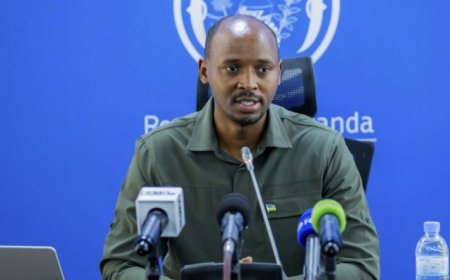
The Minister of Local Government, Jean Claude Musabyimana, recently made significant announcements regarding the regulation of religious activities in Rwanda. During a detailed discussion on the media program Urubuga rw’Itangazamakuru on Sunday, September 1, 2024, he shed light on the government's actions and rationale behind the closure of nearly 10,000 places of worship across the country. This decision is part of a broader effort by the government to ensure that religious practices align with national standards and contribute positively to the social fabric of Rwandan society.
Background of the Inspections
The decision to conduct comprehensive inspections of places of worship stems from an observed proliferation of religious denominations and faith-based organizations in Rwanda. Over the past few years, the country has seen a significant rise in the number of churches, mosques, and other religious entities. This rapid growth, while indicative of a vibrant spiritual community, has also raised concerns about the quality and safety of the worship environments provided by these institutions.
Minister Musabyimana explained that this surge in religious organizations led to a situation where many worship places were established without adhering to the necessary regulations and standards. The government’s primary concern was that the increase in these religious entities had outpaced the establishment of adequate control mechanisms, resulting in numerous places of worship operating in substandard conditions.
Findings from the Inspections
The inspections revealed that Rwanda hosts a total of 563 religious denominations, churches, and faith-based organizations, with 345 of these being different religions. While the diversity of religious expression was not seen as inherently problematic, the government identified significant issues within the operations of many of these entities.
One of the key findings was that many of the newly established churches and mosques were promoting teachings that were not only misleading but also potentially harmful to the public. Minister Musabyimana pointed out that some of these places were spreading messages that caused unnecessary fear among their congregations. For instance, certain prophecies and religious teachings were inciting fear and panic, leading to instability within communities. Others were found to be encouraging defiance against government programs, which poses a threat to national unity and development efforts.
Additionally, the inspections highlighted that a considerable number of these places of worship were physically unsafe. Some were operating in environments that did not meet the basic requirements for safety and hygiene, putting worshippers at risk. This was particularly concerning in cases where worship spaces were established in buildings not designed for such purposes, such as rooms typically used for weddings, bars, or other forms of entertainment. The practice of renting out these spaces for religious activities, often without proper adaptation or consideration for safety standards, was found to be widespread.
Closure of Substandard Places of Worship
As a result of the inspections, the government decided to close 9,880 places of worship that were found to be non-compliant with the established standards. This represents 70.1% of the total 14,093 prayer houses that were inspected. The government’s decision was not taken lightly, as it directly impacts a large number of congregations across the country. However, the closures were deemed necessary to protect the public and ensure that religious practices in Rwanda contribute positively to the well-being of the population.
Minister Musabyimana clarified that the affected places of worship have been given the opportunity to rectify the issues identified during the inspections. These institutions are required to meet the necessary legal and safety standards before they can resume their activities. The government has expressed its willingness to work with these religious entities to help them comply with the regulations, ensuring that they can continue to operate in a manner that is safe and beneficial to their followers.
In some cases, however, the situation was so dire that the government decided that certain buildings should be demolished. More than 300 prayer houses were found to be in such poor condition that renovation was not a viable option. These structures were deemed unsafe for any form of public gathering, let alone regular religious services. The government’s decision to demolish these buildings reflects a commitment to public safety and a proactive approach to preventing potential disasters.
Addressing the Issue of Unauthorized Religious Activities
Another significant issue uncovered during the inspections was the prevalence of unauthorized religious activities. In some cases, religious services were being held in locations not officially recognized as places of worship. The inspections identified 110 such locations, which were immediately shut down. These unauthorized worship spaces were often makeshift and lacked the necessary facilities to safely accommodate congregants. The government viewed these unauthorized activities as a serious risk to public safety and order.
Furthermore, the inspections revealed that in some instances, multiple religious groups were operating within the same building. It was not uncommon to find three or four different denominations sharing a single space, each with its own schedule of services. While this arrangement might have been seen as a practical solution for space constraints, it raised concerns about the appropriateness and legality of such practices. The government is now taking steps to address these issues, ensuring that all religious activities are conducted in accordance with national regulations.
Revocation of Operating Licenses
In addition to the closure of non-compliant worship places, the government has also taken action against certain religious organizations and denominations by revoking their operating licenses. A total of 47 organizations have been stripped of their right to operate in Rwanda. This decision was based on several factors, including the lack of proper documentation and the promotion of teachings that are contrary to Rwandan cultural values.
Minister Musabyimana explained that some of these organizations were operating without the necessary permits, which is a clear violation of the law. Others had obtained permits but were found to be engaging in activities that were not in line with the principles of national unity and social cohesion. For example, some of these organizations were spreading messages that incited division and discord among the population. The government viewed these activities as detrimental to the country’s stability and took decisive action to prevent further harm.
The Government’s Commitment to Religious Freedom
Despite these strict measures, Minister Musabyimana emphasized that the government remains committed to upholding the freedom of religion in Rwanda. The actions taken are not intended to suppress religious expression but rather to ensure that all religious activities are conducted in a manner that is safe, lawful, and respectful of the country’s values and regulations.
The government recognizes the important role that religious institutions play in the spiritual and social life of Rwandans. However, it also acknowledges the need for regulation to prevent the misuse of religion for harmful purposes. By enforcing standards and ensuring compliance, the government aims to create an environment where all Rwandans can practice their faith freely and safely.
The closure of 9,880 places of worship in Rwanda marks a significant step in the government’s efforts to regulate religious activities in the country. While the decision has undoubtedly impacted many congregations, it reflects a broader commitment to public safety, social cohesion, and the rule of law. The government’s actions serve as a reminder that religious freedom, while fundamental, must be exercised within the bounds of national regulations and standards. As Rwanda continues to develop, these measures are seen as essential in ensuring that religious institutions contribute positively to the nation’s growth and stability.