 English
 Kinyarwanda
























Germany’s Commissioner for Migration Calls for EU Migrants to Be Sent to Rwanda: An Emerging Debate on Migration Solutions
In a bold move that could reshape European migration policy, Joachim Stamp, the German Commissioner for Immigration, has proposed that migrants who enter European Union (EU) countries illegally be relocated to Rwanda. Stamp’s suggestion has sparked debate across Europe, as it reflects an innovative yet controversial approach to addressing the ongoing challenges of irregular migration. Rwanda, a country that has consistently shown readiness to contribute to solving global migration problems, stands at the center of this discourse.
The Context of Stamp’s Proposal
The proposal suggests that migrants who illegally cross European borders, particularly those entering through the eastern regions of Europe, should be sent to Rwanda for processing and resettlement. Stamp argues that this would relieve some of the pressure on European nations grappling with the influx of irregular migrants. He also recommended that the United Nations (UN) play a supervisory role in managing the process, ensuring that human rights and legal standards are maintained throughout.
Rwanda’s Willingness to Engage
Rwanda has a history of stepping up to address global issues, particularly when it comes to migration. In 2022, the country signed an agreement with the United Kingdom, under which migrants arriving in the UK illegally could be sent to Rwanda for processing. Although this agreement faced significant opposition from various human rights groups and political entities, Rwanda stood firm in its commitment to provide a safe and secure environment for these individuals.
Following the UK’s decision to pull out of the agreement, Rwanda made it clear that while it respected the decision, it was still willing to support similar initiatives in the future. The Rwandan government stated that it remains committed to playing a role in resolving the global migration crisis, emphasizing the importance of ensuring the safety and well-being of all migrants. Rwanda, a nation that has experienced its own share of displacement and conflict in the past, understands the plight of refugees and migrants, and thus approaches the issue with a unique sense of empathy and responsibility.
Rwanda’s leadership has also reiterated that its experience in managing migration, coupled with its desire to contribute to international peace and security, makes it a suitable partner for countries facing migration challenges. "We are always ready to help when needed, and our goal is to ensure that migrants are treated humanely and with respect for their dignity," a Rwandan official noted.
CDU’s Support for the Proposal
Stamp’s suggestion has found support within Germany’s Christian Democratic Union (CDU), a major political party that has historically played a significant role in shaping Germany’s policies. The CDU, led by prominent politicians like Jens Spahn, has expressed approval of the idea of sending illegal migrants to countries outside the European Union, including Rwanda. Spahn, in particular, has been vocal about his belief that Germany needs to adopt stricter policies to manage irregular migration. He stated that relocating migrants to Rwanda, Ghana, or other willing nations would significantly reduce the number of people entering Germany through illegal means.
In a recent parliamentary session, Spahn explained that if the German government had acted more decisively in adopting similar measures, the number of illegal migrants arriving in the country would have drastically decreased. "If we had implemented this in four, six, or eight weeks, we would have seen a sharp decline in the number of migrants arriving in Germany," Spahn argued. His comments were part of a larger 70-page document that the CDU submitted to the German Parliament, outlining a comprehensive plan to address the country’s migration challenges. The document details strategies for reducing the number of illegal migrants entering Germany by relocating them to other countries willing to accept them, such as Rwanda.
The Broader European Migration Crisis
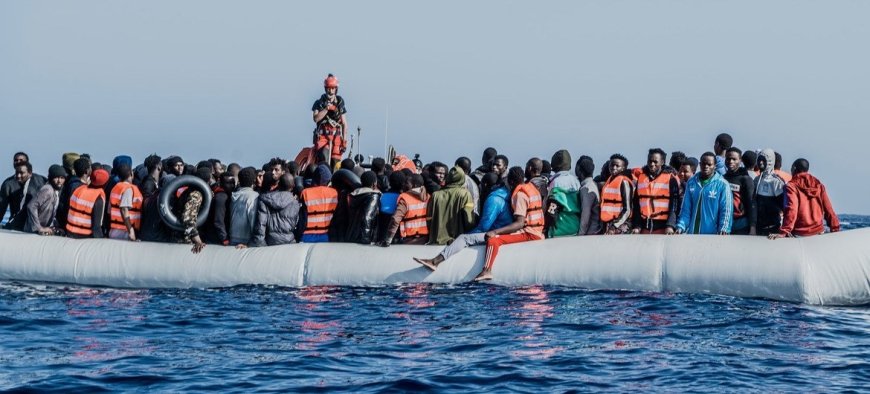
Stamp’s proposal comes at a time when Europe is facing unprecedented levels of migration, much of it driven by conflict, poverty, and instability in regions like the Middle East, Africa, and South Asia. Thousands of migrants and refugees attempt to enter Europe each year, often through dangerous routes such as crossing the Mediterranean Sea or trekking through Eastern Europe’s land borders. Many of these individuals are fleeing war-torn regions, while others are seeking better economic opportunities in Europe.
The influx of migrants has created significant political and social challenges for many EU member states, which have struggled to find a balanced approach to managing the crisis. While some countries have adopted more open-door policies, welcoming refugees and providing asylum, others have taken a harder stance, tightening border controls and seeking ways to deter irregular migration. The EU itself has been divided on how best to address the issue, with member states frequently clashing over the distribution of migrants and the responsibility of hosting asylum seekers.
The Humanitarian Dimension
One of the key concerns raised by critics of Stamp’s proposal is the potential humanitarian impact of sending migrants to Rwanda or other non-EU countries. Human rights groups have consistently expressed reservations about the idea of relocating migrants to third countries, arguing that such policies could lead to abuses and violations of international asylum laws. They point out that many migrants are fleeing persecution, violence, and other severe hardships, and relocating them to countries like Rwanda may not guarantee the protection and security they are seeking.
However, proponents of the idea argue that Rwanda has proven itself capable of managing migration in a humane and organized manner. They highlight the fact that Rwanda has a long history of providing refuge to displaced people, including hosting refugees from neighboring countries like Burundi and the Democratic Republic of Congo. Moreover, Rwanda’s government has repeatedly emphasized its commitment to upholding international human rights standards in its migration policies.
A Possible Path Forward?
As the debate around migration continues to dominate headlines across Europe, Stamp’s proposal offers a potential solution that could help alleviate some of the pressure on EU member states. However, it is also likely to spark further controversy, as questions remain about the ethical and legal implications of such a policy. The involvement of the United Nations, as suggested by Stamp, could provide a safeguard to ensure that any relocation efforts are carried out in accordance with international law and human rights standards.
Ultimately, the success of such a policy would depend on the willingness of both European nations and third countries like Rwanda to cooperate in finding sustainable solutions to the migration crisis. With migration continuing to pose a significant challenge to global stability, innovative approaches like the one proposed by Stamp may play a crucial role in shaping the future of international migration policy. Whether or not this proposal gains traction remains to be seen, but it has certainly ignited a fresh debate about how best to address one of the most pressing issues of our time.