 English
 Kinyarwanda















“Navigating Political Uncertainty: Emmanuel Macron's Search for a New Prime Minister Amidst a Fragmented French Parliament”
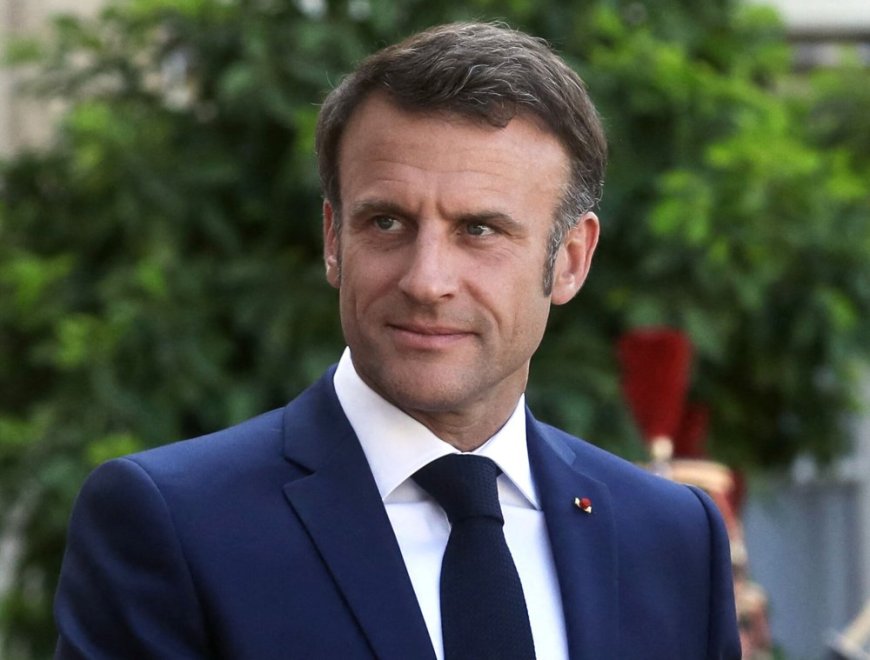
French President Emmanuel Macron recently engaged in discussions with leaders from various political parties. The primary focus of these discussions was to address several key issues, including the appointment of a new Prime Minister for France. This development comes in the wake of the legislative elections that took place in July of this year.
The July elections resulted in a complex and fragmented political landscape. No single coalition or party emerged with a clear majority in the National Assembly, which is crucial for establishing a stable government. The electoral outcome has left France in a state of political uncertainty, prompting the need for strategic negotiations and coalition-building.
One of the notable outcomes of the elections was the significant performance of the Nouveau Front Populaire (NFP), an opposition coalition. Despite not being in power, NFP managed to secure a considerable number of votes, positioning itself as a key player in the current political climate. This success has opened the door for NFP to potentially enter the government, a significant shift in the traditional political dynamics of France.
The BBC reported that Lucie Castets, a 37-year-old political figure, is considered the leading candidate for the position of Prime Minister. Castets is relatively unknown in the broader French political arena, which makes her candidacy intriguing. Her potential appointment represents a departure from the norm, as French Prime Ministers are typically selected from within the President's party or coalition. However, Castets' candidacy is viewed as a strategic move by President Macron to navigate the current political landscape.
Despite the high hopes surrounding Castets, there are concerns about President Macron’s level of support for her. Sources suggest that Macron may have reservations about Castets, which could complicate her appointment as Prime Minister. This uncertainty adds another layer of complexity to the already intricate process of forming a new government.
Traditionally, in France, the Prime Minister comes from the President's party or coalition. This convention stems from the historical practice of holding presidential and legislative elections in close succession or simultaneously. Such a system usually ensures that the President’s party has a majority in the National Assembly, facilitating the formation of a government with a clear mandate.
However, the political landscape took an unexpected turn in June of this year when President Macron called for additional legislative elections. This decision was a strategic move that disrupted the usual electoral rhythm and resulted in Macron's coalition, Ensemble, losing several seats. Consequently, the Nouveau Front Populaire gained prominence, creating a more competitive and fragmented parliamentary environment.
In light of these developments, President Macron is scheduled to meet with representatives from various opposition parties. These discussions are part of his effort to negotiate and build a coalition government that can effectively address the challenges facing France. The meetings will involve leaders from both within and outside the Ensemble coalition, reflecting the need for a broad-based approach to governance.
On Monday, Macron is expected to engage with leaders of opposition parties, including Marine Le Pen and Jordan Bardella. Marine Le Pen, a prominent far-right figure, and Jordan Bardella, a key representative of the far-right National Rally party, have been significant voices in French politics. Their inclusion in the discussions underscores the necessity of engaging with a diverse range of political perspectives to achieve a workable coalition.
The recent elections highlighted a crucial issue: no party or coalition secured the 289 seats required for a majority in the National Assembly, which consists of 577 seats. This situation necessitates the formation of a coalition government, as no single entity has the sufficient mandate to govern independently. The absence of a majority means that various parties must collaborate to establish a functional government capable of passing legislation and implementing policies.
The process of forming a coalition government involves complex negotiations and compromises. Parties must align their policies and objectives to create a unified platform that can secure parliamentary support. This process can be challenging, especially in a fragmented political environment where diverse interests must be balanced.
In addition to negotiating with opposition parties, President Macron and his team will need to address various policy issues that have been at the forefront of the electoral debate. These include economic reforms, social policies, and France's role in the European Union. The ability to navigate these issues effectively will be crucial for the success of the new government.
The outcome of these negotiations will have significant implications for France's political future. A successful coalition government could lead to stability and effective governance, addressing the key challenges facing the country. Conversely, a failure to form a cohesive government could lead to continued political instability and uncertainty.
In conclusion, the current political situation in France is characterized by a lack of clear majority in the National Assembly, prompting President Emmanuel Macron to engage in extensive negotiations with various political leaders. The potential appointment of Lucie Castets as Prime Minister reflects a willingness to explore new approaches within a shifting political landscape. The outcome of these discussions and the formation of a coalition government will be pivotal in shaping France's political trajectory and addressing the nation's pressing issues.