 English
 Kinyarwanda












Supreme Court President Dr. Faustin Ntezilyayo Highlights Key Activities for the 2024-2025 Judicial Year
On Monday, September 2, 2024, the launch of the Judicial Year for 2024-2025 marked a significant milestone for Rwanda’s justice system. The ceremony, attended by various dignitaries and stakeholders in the legal sector, set the stage for an ambitious agenda aimed at strengthening the rule of law and enhancing the efficiency of the judiciary.
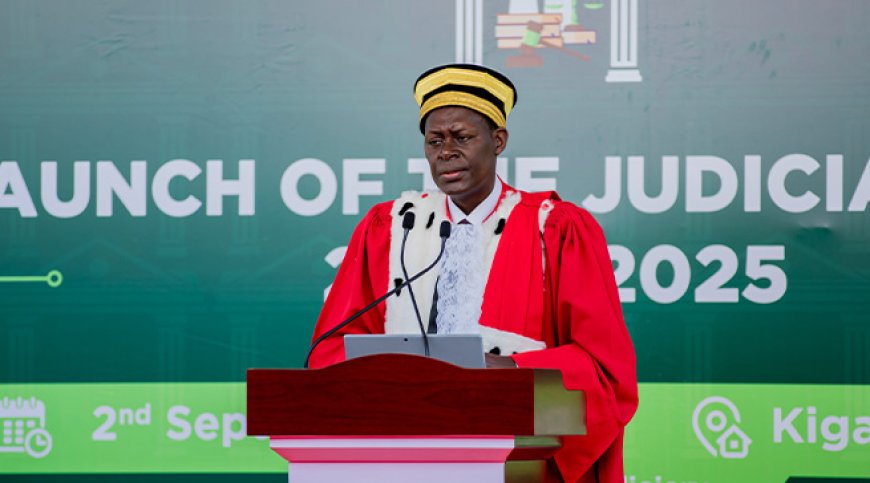
Dr. Faustin Ntezilyayo, President of the Supreme Court, outlined a comprehensive plan for the upcoming judicial year, emphasizing the need to bolster the justice system's capacity to address critical issues impacting the nation's economy and integrity. A key focus will be on improving the handling of cases related to economic crimes, including corruption, which has long been a challenge for many countries. Dr. Ntezilyayo stressed that combating corruption requires a coordinated effort among various justice sector institutions, including the Ministry of Justice, the Public Prosecution, the Bar Association, and other relevant bodies.

In his speech, Dr. Ntezilyayo highlighted the importance of delivering justice to all Rwandans as a fundamental component of the country’s development strategy. He emphasized that a fair and efficient justice system is crucial for maintaining public trust and ensuring that the rule of law is upheld. The Supreme Court’s agenda for the 2024-2025 judicial year will therefore include measures to enhance case management and streamline judicial processes to better serve the needs of the public.
A notable event in the upcoming judicial year will be Rwanda’s hosting of a conference for judges from Commonwealth countries that use English as their official language. Scheduled to commence on September 9, 2024, the conference will focus on environmental justice, addressing the intersection of law and environmental protection. The theme, “Justice for the Environment,” underscores the growing recognition of environmental issues as critical to global well-being and sustainable development.
This international conference is expected to bring together legal experts, policymakers, and judges to discuss best practices and innovative approaches to environmental justice. It will provide a platform for sharing experiences and strategies for integrating environmental considerations into legal frameworks and judicial decision-making processes. Dr. Ntezilyayo’s announcement reflects Rwanda’s commitment to contributing to global dialogues on pressing issues and positioning itself as a leader in addressing environmental challenges through the legal system.

Enhancing Judicial Processes and Case Management
The 2024-2025 judicial year will also see a concerted effort to refine judicial processes and improve case management, particularly for cases that impact the national economy. This includes cases related to corruption, financial fraud, and other economic offenses. Dr. Ntezilyayo emphasized that addressing these issues effectively requires not only strong legal frameworks but also efficient judicial processes that can handle complex and high-stakes cases promptly.
To this end, the Supreme Court will implement measures aimed at reducing delays and increasing the efficiency of case handling. This will involve reviewing and optimizing case management practices, ensuring that judicial proceedings are conducted in a timely manner, and leveraging technology to streamline processes. Dr. Ntezilyayo’s focus on these areas reflects a broader commitment to improving the overall effectiveness of the judiciary and enhancing its ability to address serious economic crimes.
Addressing Juvenile Offenses and Sexual Violence
Another priority for the upcoming judicial year will be addressing cases involving juvenile offenders and sexual violence. The Supreme Court plans to implement specialized programs and protocols to handle these sensitive cases with the appropriate level of care and attention. This includes developing guidelines for dealing with juvenile offenders in a manner that supports rehabilitation and reintegration into society, while also ensuring justice for victims of sexual violence.
The emphasis on these issues reflects a growing awareness of the need to address the specific needs of vulnerable populations within the justice system. By focusing on juvenile and sexual violence cases, the Supreme Court aims to enhance the protection of children and survivors of sexual abuse, providing them with the support and justice they deserve.
Promoting Mediation and Alternative Dispute Resolution
The judicial year will also see an increased emphasis on mediation and alternative dispute resolution (ADR) as a means of resolving disputes outside of traditional court settings. Dr. Ntezilyayo highlighted that mediation can offer a more efficient and less adversarial approach to resolving conflicts, which can be particularly beneficial for commercial disputes and other types of cases where parties seek a mutually agreeable solution.
Rwanda currently has over 800 professional mediators who are involved in various mediation programs. These mediators have been instrumental in resolving disputes effectively and efficiently, often achieving better outcomes for parties involved compared to traditional court proceedings. The Supreme Court plans to continue supporting and expanding these mediation programs, promoting their use as a viable alternative to litigation.
A key component of the Supreme Court’s agenda for the 2024-2025 judicial year is the advancement of technology within the judiciary. Dr. Ntezilyayo announced plans to upgrade integrated case management systems (IECMS) and electronic performance evaluation systems. These technological enhancements are designed to improve the efficiency and transparency of the judicial process, making it easier to manage and track cases.
The integration of technology into the judiciary aims to facilitate better case management, reduce administrative burdens, and enhance the overall quality of judicial services. By leveraging technology, the Supreme Court hopes to provide a more streamlined and user-friendly experience for those accessing the justice system.
The launch of the 2024-2025 Judicial Year marks a significant step forward for Rwanda’s legal system, with a focus on strengthening the rule of law, enhancing judicial processes, and addressing key issues such as economic crimes, juvenile justice, and environmental protection. Dr. Faustin Ntezilyayo’s outlined agenda reflects a commitment to improving the effectiveness and fairness of the judiciary, while also positioning Rwanda as a leader in addressing both national and global legal challenges.
As the judicial year progresses, the Supreme Court will continue to work closely with various stakeholders to implement these initiatives, ensuring that the justice system remains responsive to the needs of the public and capable of upholding the principles of justice and equity.