 English
 Kinyarwanda















Putin Backs Kamala Harris, Leaving Trump Puzzled
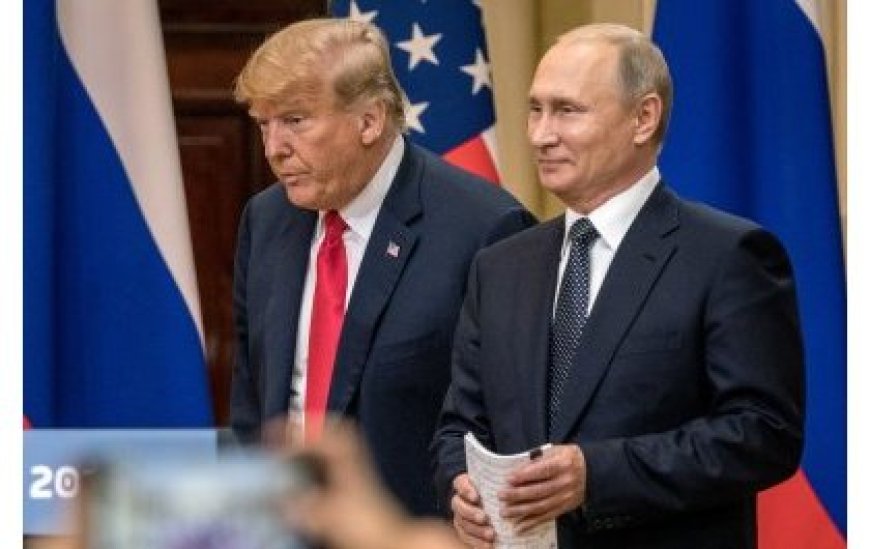
Donald Trump, the former President of the United States and current candidate for re-election in 2024, recently commented that he felt he may have been insulted by Russian President Vladimir Putin. The remark came after Putin, during a major economic forum in Moscow, expressed support for Vice President Kamala Harris’ candidacy in the upcoming U.S. presidential election. Trump, known for his complex relationship with Putin during his time in office, indicated that Putin’s statement left him puzzled, unsure whether it was intended as a slight or as a gesture of support.
Putin’s Public Endorsement of Kamala Harris
During the Moscow forum held on September 5, 2024, Putin made an unexpected declaration of support for Kamala Harris. While the Russian president initially backed President Joe Biden, the current occupant of the White House, he shifted his support after Biden withdrew from the race, opting not to seek re-election due to personal and political reasons. Putin’s endorsement of Harris came in a playful and somewhat sarcastic tone, which left many observers wondering about the sincerity of his comments.
Putin, in his characteristic manner, said, "The candidate we initially supported was the sitting President, Mr. Biden. He has now withdrawn from the race, but before stepping down, he asked all his supporters to back Ms. Harris. We will support her." This statement, delivered with a hint of humor, was interpreted by some as a tongue-in-cheek comment rather than a serious political endorsement.
What followed was a remark by Putin that caught the attention of many political analysts: he suggested that Kamala Harris might be a good candidate for Russia, primarily due to her demeanor. Putin pointed out that Harris often appears cheerful and unconcerned, laughing openly in public, which he speculated might indicate that she would not be tough on Russia or inclined to impose additional sanctions. This, of course, played into the longstanding tensions between Russia and the U.S., particularly over sanctions imposed on Russia in response to its foreign policy actions, including its invasion of Ukraine in 2022.
Putin, however, also clarified that the U.S. elections were the business of the American people alone. “The decision belongs to the Americans, and we will respect their choice,” he said, underscoring Russia's official stance of non-interference in U.S. elections, even as the nation has been repeatedly accused of attempting to influence them in the past.
Trump’s Reaction: Confusion and Uncertainty
Shortly after hearing about Putin’s comments, Donald Trump addressed his supporters at a rally in New York. While Trump has had a complicated relationship with Putin, marked by accusations of undue coziness during his first term as president, he expressed confusion over Putin’s recent endorsement of Harris. Speaking to a crowd of enthusiastic supporters, Trump said, "He [Putin] supported Kamala, and I don’t know if I should call him to say, ‘Thank you very much.’ I really don’t know what to make of it. I’m not sure if he insulted me or helped me.”
Trump’s remarks reflected his ongoing struggle to navigate his relationship with the Russian leader, who has been both an ally and an adversary to the former president. During his presidency, Trump faced widespread criticism for his perceived deference to Putin, especially during the infamous 2018 Helsinki summit, where Trump appeared to side with Putin over U.S. This latest episode seemed to leave Trump bewildered, as he was unsure whether Putin’s comments were meant to be taken seriously or whether they were an attempt to undermine him.
A History of Russian Influence in U.S. Politics
Putin’s apparent endorsement of Kamala Harris reignited the long-running debate over Russia’s influence in U.S. elections. Since the 2016 election, in which Trump defeated Hillary Clinton, U.S. intelligence agencies have accused Russia of attempting to meddle in the electoral process, primarily through cyber-attacks and disinformation campaigns. The 2016 election saw Russian hackers breach Democratic Party emails, which were later leaked, and Russian state actors allegedly spread disinformation on social media platforms to sow discord among American voters.
These accusations of interference were bolstered by the findings of Special Counsel Robert Mueller’s investigation, which confirmed that Russia had launched a concerted effort to influence the outcome of the 2016 election in favor of Trump. However, Mueller’s investigation did not conclude that Trump or his campaign had conspired with Russia in these efforts. Still, the issue of Russian interference became a major point of contention throughout Trump’s presidency, and the former president’s often-friendly rhetoric toward Putin fueled suspicions that he was not fully committed to countering Russian aggression.
In the lead-up to the 2020 election, the U.S. government again warned of potential Russian interference. Despite these warnings, Trump continued to downplay the threat, often casting doubt on the conclusions of U.S. intelligence agencies and suggesting that other countries, such as China or Ukraine, could also be involved. The 2020 election, in which Joe Biden emerged victorious, was deemed free of widespread foreign interference, but tensions between the U.S. and Russia remained high, especially after Biden’s administration imposed new sanctions on Russia for its cyber-attacks and human rights abuses.
U.S. Response to Putin’s Comments
Putin’s endorsement of Kamala Harris quickly drew a response from the U.S. government. John Kirby, a spokesperson for the U.S. National Security Council, urged Putin to refrain from commenting on American elections. "Putin should stop talking about our elections. He has no business endorsing anyone in any way. He should refrain from interfering," Kirby said in a statement. Kirby’s remarks echoed the broader concern within the U.S. political establishment that Russia, despite its public claims of non-interference, continues to seek ways to influence American politics.
The U.S. has long accused Russia of using state-sponsored media outlets, such as RT (formerly Russia Today), to push narratives that align with the Kremlin’s interests. RT, which has a global audience and operates in several languages, has been accused of spreading disinformation and promoting divisive content to undermine trust in Western democracies. In recent years, U.S. officials have also pointed to the rise of popular American social media influencers who, whether knowingly or unknowingly, have amplified Russian narratives to their followers.
The Implications of Putin’s Endorsement
Putin’s comments about Kamala Harris raise questions about Russia’s potential role in the 2024 election. While the Russian president’s statement may have been delivered in a joking manner, it highlights the ongoing challenges of managing foreign interference in American politics. The U.S. government remains vigilant about the possibility of Russian influence campaigns, and Putin’s remarks only serve to remind Americans of the delicate and often fraught nature of U.S.-Russia relations.
For Donald Trump, Putin’s endorsement of Harris presents an awkward dilemma. As a candidate, Trump is already facing scrutiny over his past ties to Russia, and any suggestion that Putin is attempting to influence the 2024 election could harm his standing among voters. At the same time, Trump’s puzzlement over Putin’s comments underscores the broader uncertainty surrounding the future of U.S.-Russia relations, as the two countries continue to navigate a complex geopolitical landscape.
Ultimately, Putin’s endorsement, whether serious or not, is a reminder of the far-reaching implications of foreign influence in U.S. politics. As the 2024 election approaches, both candidates and voters will need to remain vigilant against potential interference, ensuring that the integrity of the democratic process is upheld.