 English
 Kinyarwanda

























"Russia's Oreshnik Missile: A New Era in Military Power"
Russia has recently revealed an extraordinary technological achievement: a new missile system, dubbed "Oreshnik," which is designed to strike targets at long distances, with impressive speed and precision. The missile is capable of traveling at speeds up to 12,000 kilometers per hour, or roughly 10 times the speed of sound.
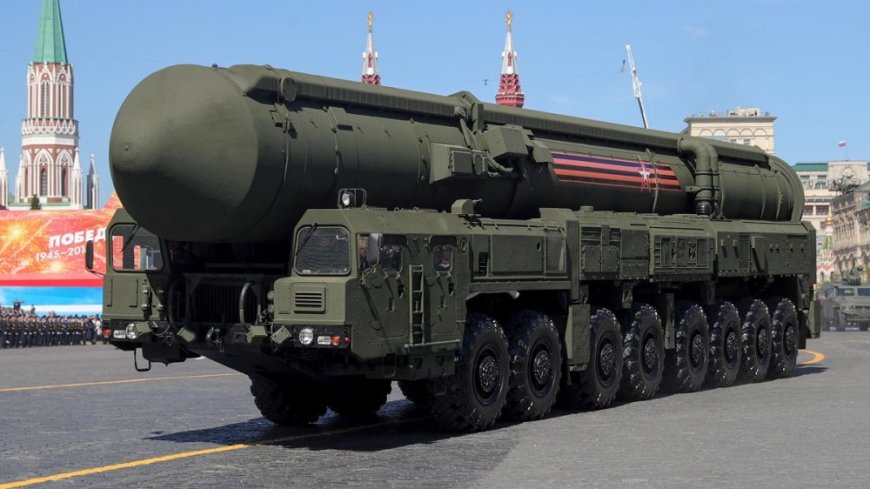
This makes it one of the fastest missiles in existence, with a range that spans between 1,000 and 3,000 kilometers. The revelation of the Oreshnik missile was made by Russian President Vladimir Putin on November 21, 2024, marking a significant milestone in Russia’s ongoing efforts to modernize its military arsenal and to counter external threats, particularly from the West and neighboring countries like Ukraine.
The introduction of the Oreshnik missile represents a leap in both speed and sophistication, as it can strike targets in a very short period, making it a formidable weapon against modern missile defense systems. Unlike some earlier missile technologies, Oreshnik is not simply an upgraded version of old Soviet-era missiles. Its design and performance are based on cutting-edge Russian technology, signaling a shift in Russia’s defense strategy since the collapse of the Soviet Union in 1991. In fact, the development of this missile is part of a broader strategy to revitalize and modernize Russia’s military capabilities to ensure its security in a changing geopolitical landscape.
This technological breakthrough, which has been under development for several years, marks Russia’s determination to create a self-sufficient, high-tech military that does not rely on imports for its advanced weaponry. President Putin emphasized this point when he announced that the components used in the construction of the Oreshnik missile are entirely domestically sourced. This move helps reduce Russia's dependence on foreign nations for vital military supplies and demonstrates its push for technological independence, which is especially significant given the sanctions and restrictions imposed on Russia by the West.
The missile is a remarkable advancement not just in speed but also in precision and destructive capability. The Oreshnik missile’s advanced targeting systems enable it to strike with great accuracy, while its high speed and range allow it to reach distant targets before any traditional defense systems have a chance to react. Putin’s announcement of this missile was framed as a critical step forward in Russia’s ability to defend itself from external threats, particularly the NATO alliance and its allies in Europe and North America.
The development of Oreshnik aligns with Russia's broader defense strategy, which has been focused on modernizing its military since the dissolution of the Soviet Union. In the wake of the USSR's collapse, Russia found itself facing new challenges as it transitioned from a superpower to a regional power in a rapidly changing global order. Over the past few decades, Russia has sought to rebuild its military strength and regain its strategic influence in world affairs. The Oreshnik missile is a direct reflection of these ambitions, demonstrating Russia’s commitment to strengthening its defense capabilities, even as it faces mounting tensions with the West.
The missile’s unique combination of speed, range, and precision makes it difficult to intercept by current missile defense systems. This is a critical factor in its design, as Russia has been increasingly concerned about the growing technological capabilities of NATO and other adversaries. The speed at which the missile travels means that it can hit its target in a fraction of the time it takes for conventional defense systems to respond, rendering traditional defense measures ineffective. This advantage could give Russia a significant upper hand in any future military confrontation, especially against technologically advanced adversaries such as the United States and European nations.
While the Oreshnik missile has been developed primarily for defensive purposes, its use in combat situations is also a matter of concern. The missile was first deployed in a real-world scenario on November 21, 2024, when Russian forces used it to strike Ukrainian military positions in the city of Dnipro, targeting a key industrial zone. The Yuzhmash facility, which was once part of the Soviet Union’s defense industry, has been used by Ukraine to produce various types of missiles. The attack on this site was part of a broader Russian retaliation against Ukraine’s own missile strikes, which had targeted Russian soil earlier in the conflict.
Ukraine, which has been embroiled in a war with Russia since 2022, has received significant military aid from the United States, the United Kingdom, and other NATO allies. This aid has included advanced missile systems such as the ATACMS and Storm Shadow, which have been used by Ukraine to strike Russian territory. In response, Russia has been ramping up its own military capabilities, and the Oreshnik missile is one of the latest advancements in this ongoing arms race.
The use of Oreshnik in the conflict marks a significant escalation in the technological sophistication of weapons being used by both sides. While the missile is not a direct solution to the war in Ukraine, it is part of Russia's broader strategy to secure its interests and to project its military power in the region. As General Sergei Karakayev, the head of Russia's missile forces, pointed out, the Oreshnik missile is not only a weapon for use in the current conflict with Ukraine but is also part of Russia’s long-term defense strategy. The missile’s ability to strike targets anywhere in Europe, where Russia perceives potential threats, gives it a significant edge in a potential broader conflict.
The introduction of the Oreshnik missile has raised alarm in Western capitals, where concerns about its potential impact on the balance of power in Europe and beyond have prompted calls for increased support for Ukraine. In particular, NATO allies have been discussing the possibility of providing Ukraine with advanced air defense systems to counter the threat posed by Russia's new missile technology. There have been reports that the Ukrainian government has reached out to the United States to discuss the possibility of acquiring more advanced air defense systems, which could help protect Ukraine’s skies from Russian missile attacks.
The United States has been one of Ukraine's most vocal and committed supporters since the conflict with Russia began in 2022. Since then, the U.S. Congress has approved over $174 billion in military aid to support Ukraine's efforts to defend itself against Russian aggression. This assistance has included advanced weapons, training, intelligence sharing, and financial support. The U.S. and its allies in Europe have also imposed a series of economic sanctions on Russia in an attempt to weaken its economy and limit its ability to continue financing its military operations.
The development of new weapons like the Oreshnik missile underscores the growing militarization of the conflict and the increasing sophistication of the weapons being used. While Oreshnik may not be a game-changer on its own, it is part of a broader trend in which both Russia and Ukraine are using increasingly advanced technologies to gain an edge over one another. The missile could also have long-term strategic implications for the broader security landscape of Europe and the world, as Russia looks to cement its place as a major global military power.
In conclusion, the Oreshnik missile represents a new chapter in Russia's military development and its ongoing confrontation with Ukraine and the West. With its impressive speed, range, and destructive capability, it offers Russia a significant advantage in modern warfare. However, the introduction of this new weapon also underscores the continuing escalation of the conflict, with both sides investing heavily in advanced technologies to secure their respective interests. As the war continues, the implications of these new developments will be felt not only in Ukraine but throughout the world, as nations reevaluate their security strategies in response to the growing threat posed by advanced missile systems like Oreshnik.