 English
 Kinyarwanda









Berhane Abrehe, Former Eritrean Minister and Prominent Critic of President Isaias Afwerki, Dies in Prison
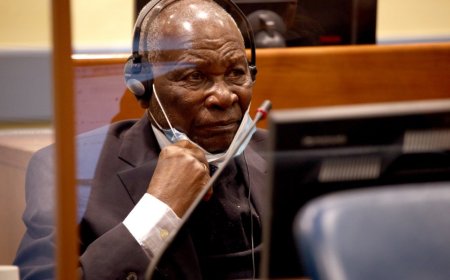
Berhane Abrehe, a distinguished former Eritrean Minister of Finance and a vocal critic of President Isaias Afwerki, has died while in prison. The news of his death has been confirmed by his family and a human rights organization working within Eritrea, highlighting a tragic end to the life of a man who spent his final years fighting for political change in his country.
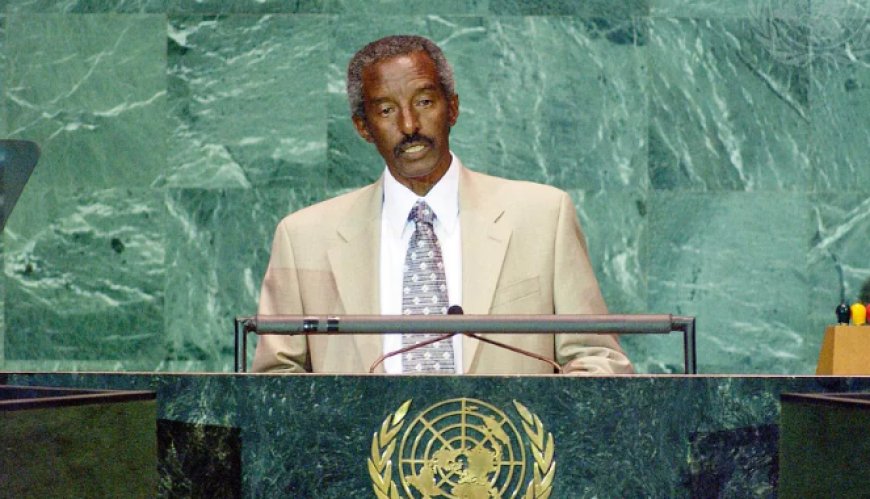
Abrehe, who was 79 years old at the time of his death, had been imprisoned for six years without being formally charged or given a trial, a situation that underscores the ongoing concerns about the state of human rights and justice in Eritrea. His detention, which began in 2018, followed his release of a book that was highly critical of the Eritrean government. The book, titled Hagerey Eritrea or L’Erythrée, ma nation ("Eritrea, My Nation"), criticized President Afwerki's regime and called for significant democratic reforms. Despite his prominent role in Eritrean politics and his previous service as a government minister, Abrehe was held incommunicado for the duration of his imprisonment.
According to the Eritrean human rights organization Human Rights Concern Eritrea (HRCE), Abrehe's detention was marked by a lack of transparency and legal process. HRCE's statement, released on August 22, 2024, detailed how Abrehe had been held in secretive conditions, with no public acknowledgment of his incarceration or charges. This secrecy reflects a broader pattern of human rights abuses in Eritrea, where dissent is often met with harsh and undisclosed penalties.
Abrehe’s arrest came in September 2018, shortly after the publication of his book, which was a bold critique of the Eritrean government's policies and President Afwerki’s leadership. In his book, Abrehe argued that Eritrea was in desperate need of democratic reforms and criticized the President as a dictator whose policies had led to widespread suffering and repression. His outspoken views and the publication of his book evidently put him at odds with the government, resulting in his arrest and subsequent detention.
Eritrea, often referred to as ‘Africa’s North Korea’ due to its repressive government and isolationist policies, has been under President Isaias Afwerki’s rule since the country gained independence from Ethiopia in 1991. The country’s struggle for independence, which lasted nearly 30 years, was marked by severe conflict and sacrifice. Following the achievement of independence, the Eritrean government promised to build a democratic society. However, over the decades, it has become known for its authoritarian rule, severe restrictions on freedoms, and widespread human rights abuses.
Abrehe was not always at odds with the government. He was once a member of the Eritrean People’s Liberation Front (EPLF), the party led by President Afwerki during the liberation struggle. His early involvement with the EPLF and subsequent role in the government reflect his initial alignment with the cause of Eritrean independence and development. However, over time, his views shifted as he became increasingly disillusioned with the government’s failure to live up to its promises of democracy and good governance.
His shift in stance became particularly evident with the publication of his book. In Hagerey Eritrea, Abrehe detailed his criticisms of the government’s failure to implement democratic reforms, highlighting the disparity between the promises made during the liberation struggle and the realities of life under Afwerki's rule. He described the Eritrean government as a dictatorship that had become detached from the needs and aspirations of its people. His call for President Afwerki to step down was a direct challenge to the long-standing leadership and the status quo, making him a target for the regime’s repression.
The international community, particularly human rights organizations, have long criticized Eritrea for its poor record on human rights. Amnesty International, for instance, has frequently reported on the Eritrean government’s practices, including arbitrary detention, torture, and the suppression of free expression. The situation surrounding Abrehe’s detention and death only adds to the concerns raised by these organizations. Amnesty International and other groups have condemned Eritrea’s actions, highlighting the broader issues of political repression and human rights violations in the country.
Abrehe’s death in prison, without a formal announcement of the cause or details regarding his treatment while detained, has further fueled criticism of the Eritrean government. His family was informed of his death by officials responsible for managing deceased prisoners, rather than through official channels or through any formal procedure. This lack of transparency and communication is symptomatic of the broader issues in Eritrea, where the government’s handling of political dissent and its treatment of prisoners often remains shrouded in secrecy.
The Eritrean government’s practice of detaining critics and political opponents without trial or due process has been a point of contention for many years. Abrehe’s case is a stark example of the consequences faced by those who challenge the regime. Despite being a former high-ranking official, his outspoken criticism made him a target, and his death in prison reflects the dangers faced by those who oppose the government’s policies.
Reports suggest that Abrehe will be buried in the ‘Asmara Patriots’ cemetery, a site reserved for individuals who fought for Eritrea’s independence. This is intended to honor his past contributions to the country’s liberation struggle, despite his later opposition to the government. However, the fact that his body has not yet been handed over to his family, and that they have not been informed of the exact date or cause of his death, adds to the sense of injustice and mystery surrounding his final days.
The situation surrounding Berhane Abrehe's death underscores the ongoing human rights issues in Eritrea and the need for greater international attention and intervention. His case highlights the broader challenges facing Eritrean society, where political dissent is often met with severe repercussions and where the rule of law remains elusive.
As the transnational community continues to cover the situation in Eritrea, Abrehe’s death serves as a dimmed memorial of the cost of political suppression and the struggle for mortal rights in one of the world’s most uncommunicative and authoritarian administrations. His heritage, particularly his advocacy for popular reforms and his notice of the Eritrean government, will probably continue to reverberate among those who fight for justice and mortal rights in Eritrea and beyond.